


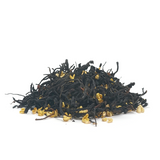


Why This Tea Was Curated
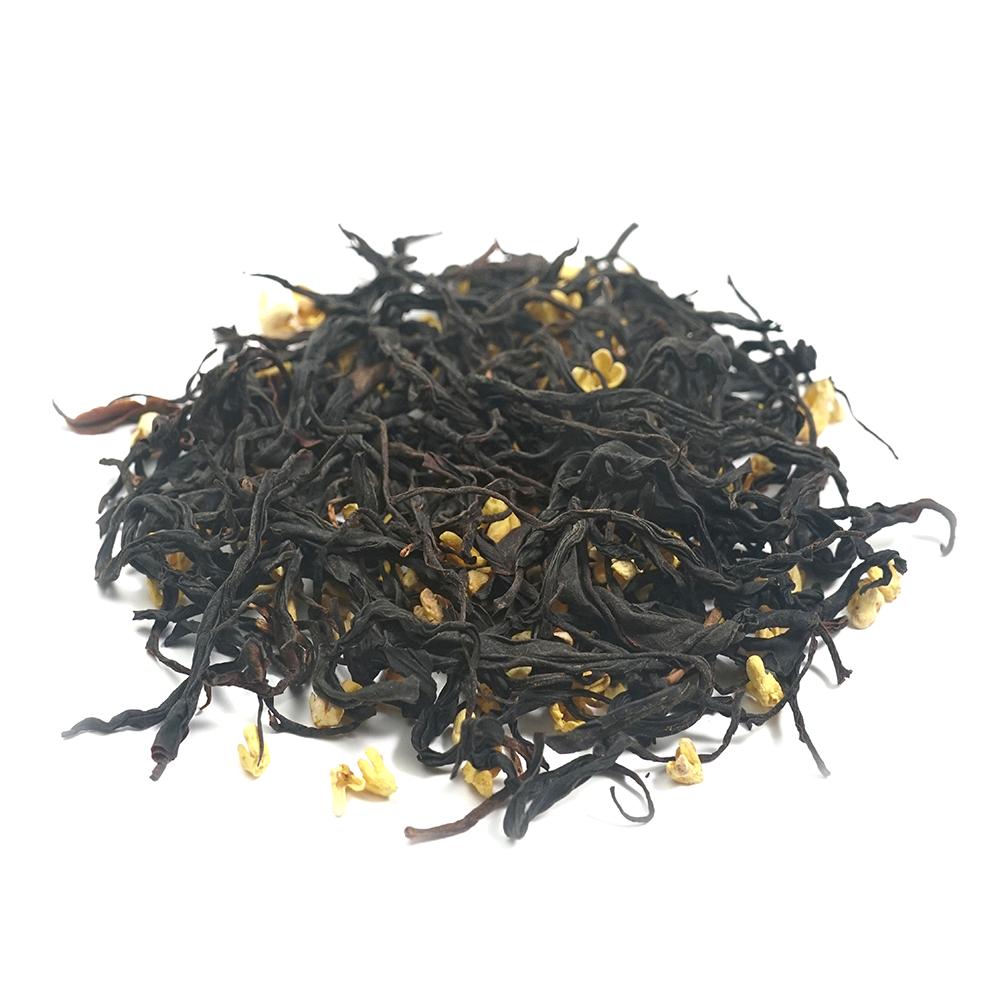
This Osmanthus Black Tea is crafted through a traditional five-round scenting process (5x scenting), allowing real Guilin osmanthus aroma to infuse naturally into the Yunnan black tea leaves—without artificial flavoring or simple flower mixing—creating a smooth, floral-honeyed cup with lasting fragrance.
✔Rich osmanthus aroma with sweet floral notes.
✔Smooth, lightly sweet taste with a pleasant finish.
✔Crafted using traditional scenting methods for authentic flavor.
(Further Reading: A Fragrant Chinese Floral Tea and Complete Guide )
Flavor Profile of Osmanthus Black Tea
Aroma: Osmanthus, honey, floral-fruity
Taste: Smooth and gently sweet, with honeyed floral notes
Mouthfeel: Smooth, mellow, medium-bodied
Flavor Ratings
5 indicates the strongest intensity of that characteristic, not overall quality.
| Sweetness | 4 / 5 (5 = sweetest) |
|---|---|
| Bitterness | 3 / 5 (5 = most bitter) |
| Astringency | 2 / 5 (5 = most astringent) |
| Body / Thickness | 3 / 5 (5 = thickest body) |
| Roast Level | 0 / 5 (5 = darkest roast) |
| Brewing Ease | 4 / 5 (5 = easiest to brew) |
✔ Drinkers who enjoy floral, sweet, aromatic black teas.
✘Those who prefer heavy roast or smoky tea profiles.
How to Brew Osmanthus Black Tea
Mug Brewing
Tea-to-Water: 2 g / 300 ml (10 fl oz)
Water Temp: 85°C (185°F)
Steep Time: 1–2 min
Long steeping may cause bitterness. Adjust accordingly and drink promptly.
Gongfu Brewing
Tea-to-Water: 5 g / 120 ml (4 fl oz)
Water Temp: 85°C (185°F)
Steep Time: 2–3 sec · Increase gradually
Use a moderate amount of tea. Avoid over-steeping.
To preserve the osmanthus aroma and avoid bitterness, we recommend slightly lower water temperature than typical black tea brewing.
Osmanthus Black Tea Details & Specifications
| Tea Category | Scented Black Tea (Scented with osmanthus) |
|---|---|
| Scenting Process | 5-Round Traditional Scenting (Handcrafted) |
| Plucking Standard | One bud + one or two leaves |
| Cultivar | Yunnan large-leaf |
| Season | Autumn |
| Oxidation Level | Fully fermented (high) |
| Aroma | Osmanthus, honey, floral-fruity |
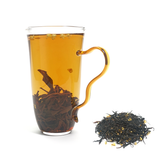
| Liquor Color | Bright orange to amber |
| Mouthfeel | Mellow and sweet |
| Shelf Life | Up to 36 months under proper storage |
| Caffeine | Medium (generally lower than strong coffee) |
| Storage |
Store sealed, dry, away from light and strong odors.
|
| Origin | Osmanthus (Guilin, Guangxi) + Black tea base (Fengqing, Yunnan), China |
Origin & Terroir of Osmanthus Black Tea
Osmanthus Flowers (Guilin, Guangxi)
Our osmanthus flowers come from Guilin, Guangxi Province. Blooming mainly from September to October, the flowers are hand-picked and then selected through machine grading + manual sorting for fuller aroma and more stable quality. All materials are screened to strict food-grade standards for cleanliness, low impurities, and a naturally rich floral fragrance.
Black Tea Base (Fengqing, Yunnan)
The tea base is made from large-leaf tea trees from Fengqing, Yunnan Province (the same species line as Assam tea trees). Rich in natural compounds, this Yunnan black tea base gives the tea better sweetness and brewing endurance. It supports the osmanthus aroma while preserving a clear tea character, layered taste, and a lingering sweet finish.
Our Sourcing Method
We do not rely on a single farmer or one fixed tea garden, because tea quality can vary from year to year due to climate, picking timing, and processing details.

Instead, NPTEA sources samples from multiple channels each season and selects materials through repeated testing and tasting, so we can offer a more balanced and consistent Chinese loose leaf tea.
History of Osmanthus Black Tea
The history of osmanthus tea in China dates back to the Tang Dynasty, with notable mentions in the Song and Qing Dynasties. The osmanthus variety grown in Guilin is prized for its large, thick petals and rich aroma, making it ideal for scenting teas.
Since the 1970s, Guilin tea factories have been producing osmanthus tea, including various blends with green, black, and oolong teas, showcasing the region's rich tea culture.
Osmanthus Black Tea FAQs
Q1. Is Osmanthus black tea flavor very light?
The flavor is not light; it has a rich osmanthus aroma and a smooth, sweet taste.
Q2. How should I brew Osmanthus black tea?
For mug brewing, use 2g of tea per 300ml of water at 85°C for 1-2 minutes. For Gongfu, use 5g per 120ml, steeping for 2-3 seconds and increasing gradually.
Q3. Can I brew this tea without special equipment?
Yes, you can brew Osmanthus Black Tea in a regular mug or cup; just follow the recommended brewing parameters.
Q4. Does this Osmanthus tea contain caffeine?
Yes, it has a medium caffeine level, generally lower than strong coffee.
Q5. How should I store Osmanthus black tea?
Store it sealed, away from light, in a cool, dry place to maintain its freshness.

- Choosing a selection results in a full page refresh.